Move Like You Mean It: Why Walking and Strength Training Matter More Than the Workout You’re Skipping
Last week we talked about eating intentionally instead of eating perfectly, asking one simple question before a meal: is this going to fuel me, or just fill me? This week, we’re asking the same question about movement.
Because here’s the thing about this season, whether your calendar is packed with practices and pickups or your house just went quiet: movement is usually the first thing that gets sacrificed. Not because you don’t value it. Because it feels like the one thing you can skip without anyone noticing.
You’ll notice, though. Your body will too.
Why movement and eating are the same conversation
Intentional eating fuels your body. Intentional movement is what that fuel is for. They’re not two separate boxes to check, they’re the same practice, aimed at the same goal: a body that can keep up with the life you’re actually living.
This matters more in perimenopause and menopause than it did in your 20s and 30s. Muscle mass declines with age, and that decline speeds up as estrogen drops. Less muscle means a slower metabolism, which means the food you’re eating intentionally has fewer places to go. Movement isn’t separate from your nutrition plan. It’s what makes the nutrition plan work.
That’s why this week isn’t about adding a workout you’ll resent. It’s about two simple, sustainable practices: walking and strength training.
Walking: the most underrated tool you have
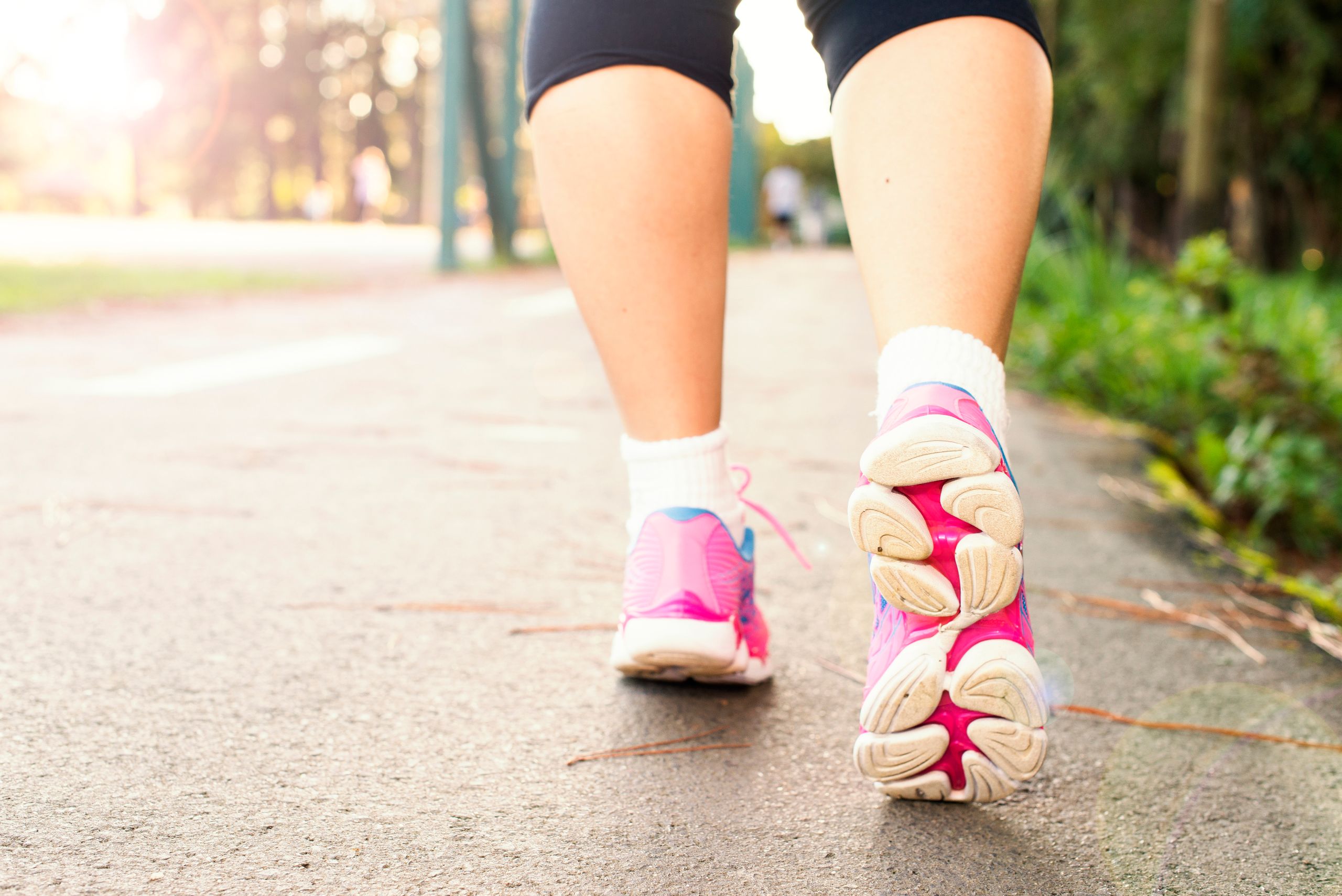
Walking doesn’t ask much of you. No gym, no equipment, no complicated plan, just shoes and a door. And yet it does more for a midlife body than almost anything more complicated:
- Blood sugar regulation. A 10-15 minute walk after a meal helps your body use that fuel instead of storing it, which matters even more once insulin sensitivity starts to shift with hormonal changes.
- Stress and cortisol. Chronic stress (hello, sandwich generation) raises cortisol, and elevated cortisol is directly linked to stubborn midsection weight. Walking is one of the few forms of movement that actively lowers cortisol instead of spiking it.
- Bone density. Weight-bearing movement, even something as simple as walking, helps slow the bone density loss that accelerates after menopause.
- Accessibility. You can do it while on a call with your mom, while waiting for a practice to end, while your college kid is asleep on a Saturday morning. It fits into a life that doesn’t have extra room.
This week’s goal: If new to walking consistently: one 15-20 minute walk, most days. Not a step count. Not a streak. Just movement, on repeat. For seasoned walkers: step up the pace to a brisk walk; or add a session of interval walking 1 minute on 1 minute regular pace for a total of 10 minutes.
Strength training: the piece most women skip, and shouldn’t
If walking is the foundation, strength training is what protects everything else, your metabolism, increases lean muscle, your bones, your independence as you age. And it’s the piece most women in this season have never been taught to prioritize.
PSA: You will not bulk up!
Here’s why it matters right now: starting in your 30s, and accelerating through perimenopause, you naturally lose muscle mass each year if you’re not actively working to maintain it. That muscle loss is a major reason “what worked in your 20s” stops working, your body has less metabolically active tissue than it used to, even if your eating hasn’t changed.
You don’t need a gym membership or an hour a day. Two to three short strength sessions a week, 20-30 minutes, using body weight, dumbbells, or resistance bands, is enough to start reversing that trend.
This week’s goal: two strength sessions, 20 minutes each. Squats, push-ups (modified is fine), rows, and a plank. That’s a full session.
The real point isn’t the workout
This isn’t about training for anything. It’s not about earning your food or punishing your body for a season that’s asked for too much.
It’s about giving your body what it needs to keep carrying you, and everyone you’re carrying, through whatever this season looks like for you right now and insurance for your future you.
Put the mask on. Take the walk. Do the squats. Then go be everything else you need to be today.
This is Week 2 of our August series, “Back to School, Back to You.” Last week: intentional eating. Next week: protecting your sleep through a season that keeps shifting under you.